
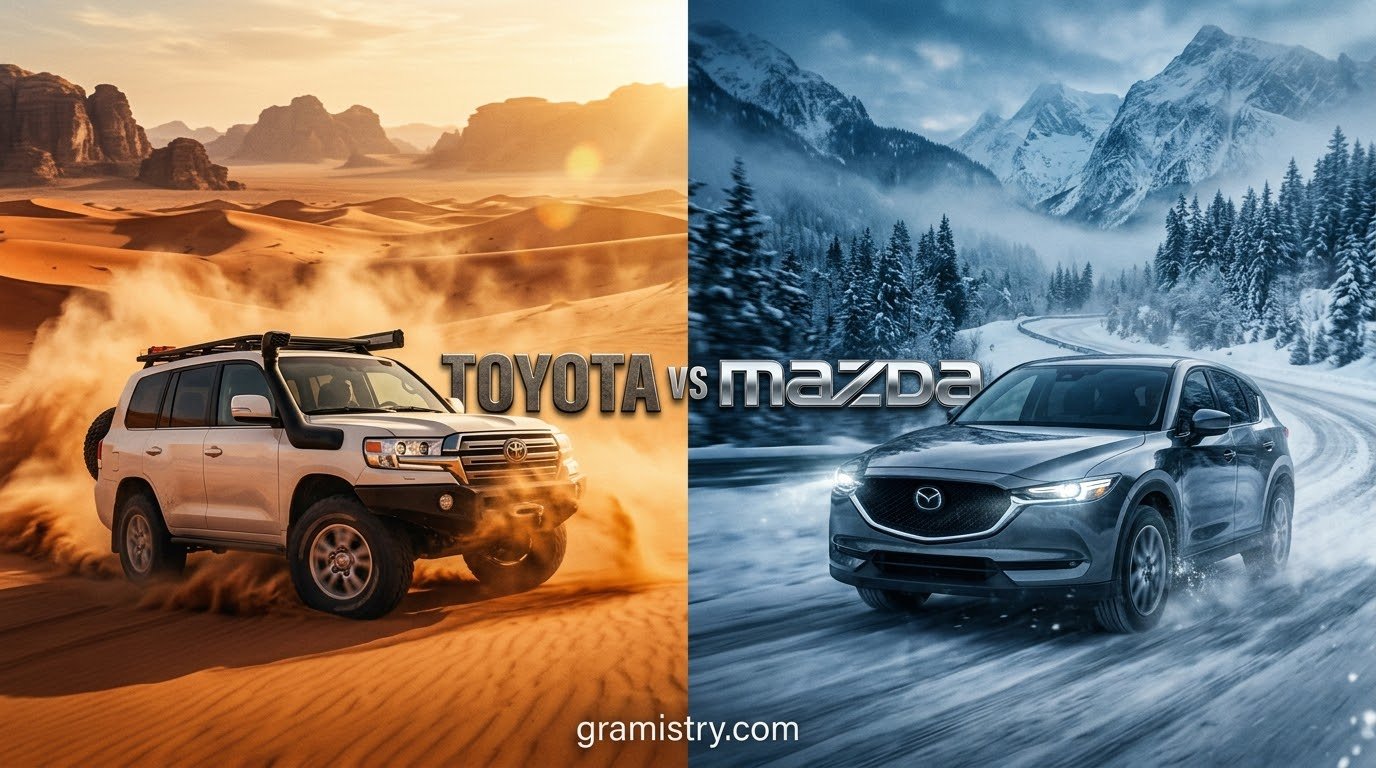
Choosing between Toyota and Mazda can be surprisingly difficult.
Both are respected Japanese automakers, both build cars known for quality, and both offer practical vehicles for everyday driving.
However, they approach car design in very different ways.
Toyota has built a reputation around reliability, efficiency, broad model availability, and practical ownership.
Mazda, meanwhile, has developed a stronger identity around driving enjoyment, distinctive design, and a more engaging experience behind the wheel.
Although they look or sound similar, they serve completely different purposes.
If you are wondering about Toyota or Mazda, this guide will help you understand the major differences between the two brands, including reliability, fuel economy, performance, comfort, technology, maintenance, SUVs, hybrid options, and overall value.
Whether you are buying your first car or replacing an older vehicle, this comparison can help you decide which brand better matches your needs.
What Is Toyota?
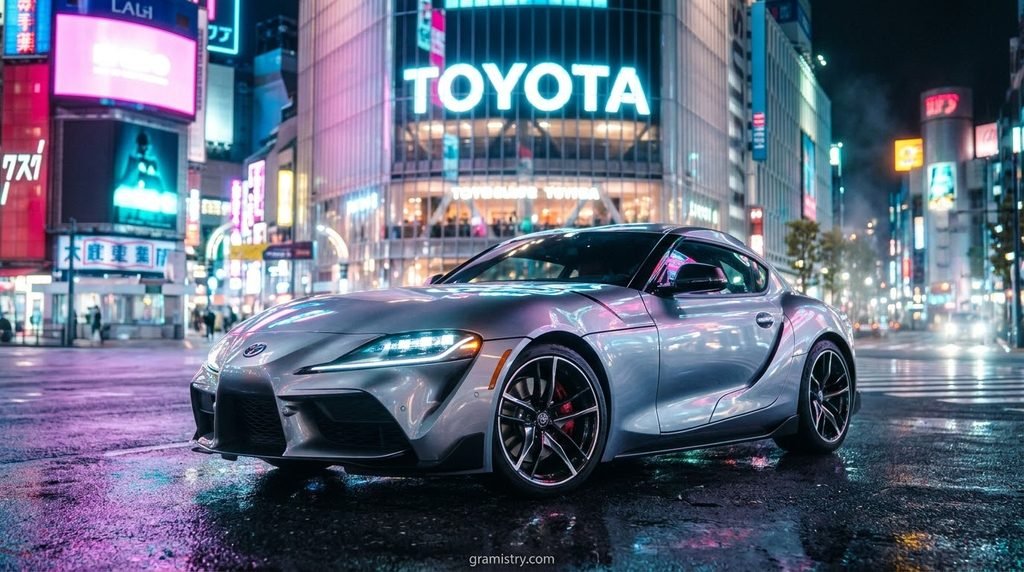
Toyota is a Japanese automobile manufacturer headquartered in Toyota City, Aichi Prefecture, Japan. Toyota Motor Corporation was established on August 28, 1937, and has grown into one of the world’s largest automotive companies.
The company produces passenger cars, SUVs, trucks, commercial vehicles, and electrified vehicles. Toyota is particularly well known for models such as the Corolla, Camry, RAV4, Prius, Highlander, Land Cruiser, and Tacoma, although the exact lineup varies by country.
What does Toyota mean in the automotive world?
Toyota’s identity is strongly associated with practical transportation. The brand generally focuses on:
- Long-term ownership
- Fuel efficiency
- Reliability
- Practical interior design
- Strong resale demand
- Hybrid technology
- A wide range of vehicle types
Toyota’s approach is often conservative compared with Mazda. Instead of trying to make every vehicle feel sporty, Toyota tends to concentrate on making vehicles easy to live with.
That does not mean Toyota vehicles are boring. Models such as the GR86, GR Corolla, GR Supra, and various performance-oriented trims show that Toyota also has a performance side.
Toyota’s history
Toyota’s roots go back to the Toyoda family and the machinery business. Toyota Motor Co., Ltd. was established in 1937, and its first major automotive plant began operations in 1938.
Over the decades, Toyota expanded internationally and developed a reputation for manufacturing efficiency. Its production philosophy became influential throughout the global automobile industry.
Today, Toyota describes itself as evolving into a mobility company while continuing to develop and manufacture vehicles worldwide.
Toyota’s biggest strength
For many buyers, Toyota’s biggest advantage is peace of mind.
A person who wants a dependable daily driver, a fuel-efficient family car, or a practical SUV may naturally place Toyota high on the shopping list.
However, Toyota is not automatically the best choice for everyone. Individual models differ, and reliability can depend on the specific engine, transmission, model year, maintenance history, and previous use.
What Is Mazda?
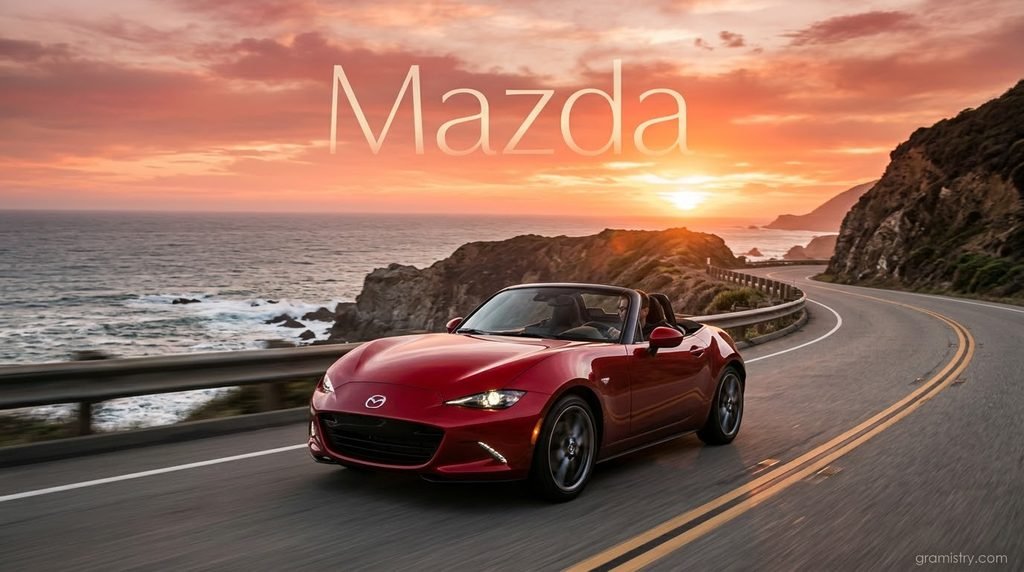
Mazda is another Japanese automobile manufacturer, headquartered in Hiroshima, Japan. Mazda Motor Corporation was founded on January 30, 1920, originally as Toyo Cork Kogyo.
Unlike Toyota’s broad practical image, Mazda has built much of its modern identity around driving enjoyment, design, and engineering character.
Mazda produces cars and SUVs for multiple international markets. Its lineup includes vehicles such as the Mazda3, CX-30, CX-5, CX-50, CX-60, and other models depending on the country.
What makes Mazda different?
Mazda often tries to make ordinary driving feel more engaging.
Its design philosophy emphasizes attractive proportions and a premium-looking appearance, while its engineering philosophy has included technologies such as SKYACTIV.
Mazda’s own corporate philosophy describes its goal in terms of creating experiences connected with the “joy of driving.”
That philosophy helps explain why Mazda is frequently considered a driver’s brand.
Mazda’s history
Mazda’s story began in 1920 as Toyo Cork Kogyo. The company later shifted from cork-related manufacturing toward machinery and eventually automobile production.
Mazda became famous for experimenting with unusual automotive technology, particularly rotary engines. The company eventually became the first manufacturer to mass-produce rotary-engine vehicles, an important part of its engineering history.
Mazda’s history also includes iconic sports cars such as the RX-7 and MX-5 Miata. The RX-7 became especially famous for its lightweight approach and rotary engine, while the MX-5 helped establish the modern lightweight two-seat roadster as a major enthusiast category.
Mazda’s biggest strength
Mazda’s biggest advantage is often its balance between practicality and driving enjoyment.
A Mazda can make sense for someone who needs a comfortable everyday vehicle but still cares about steering feel, handling, styling, and the overall experience of driving.
Toyota vs Mazda: Key Differences
If you want the short answer, the two brands generally appeal to different priorities.
- Toyota emphasizes practicality, efficiency, and broad ownership appeal.
- Mazda emphasizes driving enjoyment, design, and a more driver-focused experience.
- Toyota generally offers a broader range of hybrid options.
- Mazda often gives its vehicles a sportier character.
- Toyota has a larger overall global vehicle portfolio.
- Mazda has a smaller and more focused lineup.
- Toyota is often the safer choice for buyers who prioritize efficiency and low-stress ownership.
- Mazda can be especially appealing to drivers who want their daily car to feel more engaging.
- Both brands can offer excellent value, but the best choice depends on the individual model and your priorities.
Toyota vs Mazda Comparison Table
| Feature | Toyota | Mazda |
|---|---|---|
| Brand origin | Japan | Japan |
| Founded | 1937 | 1920 |
| Overall focus | Practicality, efficiency, broad mobility | Driving enjoyment, design, engineering |
| Reliability reputation | Excellent overall reputation | Generally strong reputation |
| Driving feel | Usually comfortable and predictable | Often more engaging |
| Hybrid availability | Very strong | More limited and market-dependent |
| SUV selection | Very broad | More focused |
| Sports-car appeal | Strong in selected models | Strong enthusiast heritage |
| Fuel economy | Often a major strength | Generally competitive |
| Styling | Practical to bold, depending on model | Often sporty and upscale |
| Resale demand | Generally strong | Can be strong, depending on model |
| Best for | Efficiency and practical ownership | Drivers who value engagement and design |
Toyota or Mazda: Which Is More Reliable?
This is one of the most common questions people ask.
The honest answer is that you should compare specific models and model years rather than assuming one entire brand is always more reliable.
Toyota has an exceptionally strong reputation for dependable vehicles, helped by decades of large-scale production and a broad customer base. Mazda also has a strong reliability reputation, but individual Mazda and Toyota models can have different reliability records.
When evaluating reliability, consider:
- The exact model.
- The model year.
- The engine and transmission.
- Maintenance history.
- Mileage.
- Previous accident or repair history.
- Recalls and service campaigns.
- How the vehicle was driven.
For a used car, a well-maintained Mazda can be a better purchase than a poorly maintained Toyota.
Likewise, a carefully maintained Toyota is not automatically trouble-free simply because of the badge on the hood.
Quick tip: If you are buying used, have an independent mechanic inspect the vehicle before purchasing it.
Toyota or Mazda: Which Has Better Fuel Economy?
Toyota has a major advantage if fuel economy is one of your highest priorities, particularly because of its extensive experience with hybrid powertrains.
Toyota has been one of the most prominent manufacturers of hybrid vehicles, and models such as the Prius helped make hybrid technology mainstream.
Mazda also develops efficient powertrains, but its vehicle lineup has historically been more focused on conventional engines and driving characteristics.
Therefore:
Choose Toyota if maximum fuel efficiency and hybrid availability are major priorities.
Choose Mazda if you want good efficiency while placing more emphasis on driving feel and design.
Actual fuel economy varies considerably by model, engine, transmission, drivetrain, vehicle weight, driving conditions, and market.
Toyota or Mazda: Which Is Better to Drive?
If driving enjoyment matters, Mazda often has the advantage.
Mazda has deliberately developed a brand identity around the relationship between driver and vehicle. Steering, chassis tuning, seating position, and overall vehicle balance are important parts of its product philosophy.
Toyota, on the other hand, generally prioritizes comfort, usability, efficiency, and broad appeal.
That does not mean every Mazda is sporty or every Toyota is dull.
A Mazda SUV can be comfortable and relaxed, while a Toyota GR model can be extremely engaging.
The difference is more about the typical personality of each brand’s mainstream vehicles.
Choose Mazda if you enjoy:
- Responsive steering
- A sportier feel
- Driver-focused interiors
- Attractive exterior design
- More engaging handling
Choose Toyota if you prefer:
- Relaxed driving
- Easy daily usability
- Strong efficiency
- Broad vehicle choices
- Comfortable long-distance transportation
Toyota or Mazda for SUVs
SUV buyers have plenty to consider.
Toyota has a particularly broad SUV and crossover portfolio. Depending on the market, buyers may find everything from compact crossovers to large SUVs and off-road-oriented vehicles.
Mazda’s SUV lineup is smaller, but its vehicles tend to focus strongly on design, cabin quality, and driving manners.
If you want maximum choice, Toyota is usually the easier brand to shop.
If you want a more focused lineup with a strong emphasis on styling and driving experience, Mazda may be more attractive.
For example, someone comparing a Toyota RAV4 with a Mazda CX-5 should look beyond brand reputation. Compare the exact model years, powertrains, fuel economy, cargo capacity, safety equipment, price, warranty, and local service support.
Toyota or Mazda for Families
Toyota can be an excellent choice for families because of its broad selection of practical vehicles.
Depending on your market, Toyota offers compact cars, midsize sedans, crossovers, larger SUVs, pickups, and hybrid vehicles.
Mazda can also work very well for families, particularly if you want a comfortable vehicle with an upscale interior and enjoyable driving characteristics.
However, families should pay close attention to practical details such as:
- Rear-seat space
- Child-seat compatibility
- Cargo capacity
- Door opening angles
- Visibility
- Safety equipment
- Fuel economy
- Long-term running costs
A vehicle that looks great in photographs may not be the best family car once you install two child seats and fill the cargo area.
Toyota or Mazda for Long-Term Ownership
For long-term ownership, Toyota is often the more obvious choice for buyers who prioritize efficiency, broad service availability, and a large ecosystem of vehicles and parts.
Mazda can also be a strong long-term ownership choice, particularly when the vehicle is properly maintained.
The important point is that maintenance matters more than brand reputation alone.
Follow the manufacturer’s service schedule. Use appropriate fluids and parts. Fix small problems before they become major ones. Keep records of maintenance.
A neglected Toyota can become expensive. A well-maintained Mazda can remain enjoyable for many years.
Toyota or Mazda: Which Is Better for Resale Value?
Toyota generally has a very strong reputation in the resale market.
Several factors contribute to resale value, including:
- Brand reputation
- Reliability expectations
- Demand
- Fuel economy
- Vehicle condition
- Mileage
- Maintenance history
- Model popularity
- Local market conditions
Mazda vehicles can also hold their value well, but resale performance varies significantly by model and market.
If resale value is important, compare actual used-market prices for the specific models you are considering rather than relying only on the manufacturer’s reputation.
Real-Life Conversation Examples
Conversation 1: The Practical Buyer
Ali: I’m looking for a car that I can keep for years without making things complicated.
Hamza: Have you considered Toyota?
Ali: Yes. I was also looking at Mazda.
Hamza: If low-stress ownership and fuel efficiency are your priorities, Toyota might be worth a closer look.
🎯 Lesson: Toyota is often attractive to buyers who put practicality, efficiency, and long-term ownership high on their list.
Conversation 2: The Driving Enthusiast
Sara: I want an everyday car, but I don’t want driving to feel boring.
Ayesha: Then I’d definitely test-drive a Mazda.
Sara: Why Mazda?
Ayesha: The brand puts a lot of emphasis on driving feel and vehicle design.
🎯 Lesson: Mazda can be a strong choice for drivers who want practicality without giving up driving enjoyment.
Conversation 3: The Hybrid Buyer
Usman: Fuel costs are my biggest concern.
Bilal: Are you considering a hybrid?
Usman: Yes.
Bilal: Then Toyota should definitely be on your shortlist.
🎯 Lesson: Toyota’s extensive hybrid experience makes it especially relevant to buyers focused on fuel efficiency.
Conversation 4: The Used-Car Buyer
Ahmed: I found an older Toyota at a good price.
Omar: What’s the maintenance history?
Ahmed: I haven’t checked it yet.
Omar: Get the car inspected before you buy it. The badge alone doesn’t tell you everything.
🎯 Lesson: A vehicle’s actual condition and maintenance history matter more than simply choosing a famous brand.
When to Choose Toyota vs Mazda
Choosing between Toyota and Mazda becomes easier when you identify your priorities.
Choose Toyota if:
- You want strong fuel-efficiency options.
- You are interested in hybrid vehicles.
- You want a broad selection of cars and SUVs.
- You prioritize practical ownership.
- You care about strong market demand.
- You want a vehicle that is easy to understand and live with.
Choose Mazda if:
- You enjoy driving.
- You care about steering and handling.
- You prefer sporty styling.
- You want a more driver-focused cabin.
- You like a premium feel without automatically moving into a luxury brand.
- You want an everyday vehicle with more personality.
An easy memory trick
Think of it this way:
Toyota = practical and efficient.
Mazda = stylish and engaging.
This is only a general guideline, not a rule for every vehicle.
Toyota vs Mazda for US and UK Buyers
Toyota and Mazda are both Japanese brands, but vehicle availability and specifications differ by country.
A Toyota or Mazda model sold in the United States may have different engines, trim levels, safety equipment, dimensions, or names from a vehicle sold in the United Kingdom, Europe, Japan, or another market.
This is especially important when researching used cars online.
A review of a Mazda sold in the United States may not perfectly describe the version sold in another country.
The same applies to Toyota.
Always check the official website or local dealer information for your country before relying on specifications, pricing, warranty information, or available equipment.
For language learners, resources such as Gramistry can also help readers understand automotive vocabulary when comparing vehicle reviews and specifications.
Common Mistakes People Make
Mistake 1: Assuming Toyota is always more reliable
Incorrect thinking: “It’s a Toyota, so it can’t have problems.”
Why it is wrong: Every vehicle can develop problems. Maintenance, mileage, model year, driving conditions, and previous ownership all matter.
Mistake 2: Assuming Mazda is a sports-car brand
Incorrect thinking: “Mazda only makes sporty cars.”
Why it is wrong: Mazda produces practical sedans, hatchbacks, SUVs, and other everyday vehicles. Driving enjoyment is part of the brand’s identity, but practicality remains important.
Mistake 3: Comparing brands instead of models
Incorrect thinking: “Toyota is better than Mazda.”
Why it is wrong: A specific Toyota may be better than a specific Mazda for one buyer, while another Mazda may be the better choice for someone else.
Mistake 4: Ignoring the local market
A vehicle’s price, available trims, parts, servicing, warranty, and resale value can vary by country.
Always research the exact version available where you live.
Mistake 5: Buying based only on fuel economy
Fuel economy matters, but it is not the only ownership cost.
Insurance, tires, maintenance, financing, depreciation, repairs, and purchase price can also affect the total cost of ownership.
Fun Facts and History
1. Mazda started outside the automotive industry
Mazda was founded in 1920 as Toyo Cork Kogyo. The company later moved toward machinery and eventually automobile manufacturing.
2. Toyota was established as an automobile company in 1937
Toyota Motor Co., Ltd. was established on August 28, 1937. Its Koromo Plant began operations the following year.
3. Mazda has a famous rotary-engine legacy
Mazda became closely associated with rotary-engine technology and achieved mass production of rotary-powered vehicles, giving the company a distinctive place in automotive history.
4. Both companies are deeply connected to Japan
Toyota is headquartered in Toyota City, Aichi Prefecture, while Mazda is headquartered in Hiroshima. Both companies have developed global automotive businesses from their Japanese roots.
FAQs:
Is Toyota better than Mazda?
Neither brand is universally better. Toyota is often the stronger choice for buyers who prioritize efficiency, hybrid availability, practicality, and broad model selection. Mazda can be more appealing to drivers who value design and driving enjoyment. The best choice depends on the specific vehicle, model year, budget, and your personal priorities.
Is Mazda as reliable as Toyota?
Mazda has a strong reputation for reliability, while Toyota has an especially established reputation for long-term dependability. However, reliability should be judged at the model and model-year level. Maintenance history, mileage, engine choice, transmission, and previous use can significantly affect the reliability of an individual vehicle.
Which is cheaper to maintain, Toyota or Mazda?
Maintenance costs depend on the specific model, age, mileage, location, parts prices, labor rates, and service schedule. Toyota may have an advantage in some markets because of its large vehicle population and extensive service network. However, a Mazda can also be affordable to maintain when properly serviced.
Which has better fuel economy, Toyota or Mazda?
Toyota generally has the advantage when comparing its extensive range of hybrid vehicles with conventional gasoline vehicles. Mazda also offers efficient vehicles, but its lineup has traditionally placed more emphasis on balancing efficiency with driving character. Always compare the exact models and powertrains rather than the brands as a whole.
Which is better for a family, Toyota or Mazda?
Toyota is often a strong family choice because of its broad range of practical cars and SUVs and its availability of efficient powertrains. Mazda can also be excellent for families, especially for buyers who value interior design and driving enjoyment. The right choice depends on passenger space, cargo needs, safety features, budget, and the exact model.
Which brand is better for driving, Toyota or Mazda?
Mazda generally has the stronger reputation for driving engagement among its mainstream vehicles. Steering, handling, chassis tuning, and driver involvement are important parts of Mazda’s identity. Toyota offers comfortable and capable vehicles while also producing enthusiast-focused models. Test-driving the exact vehicles is the best way to compare them.
Does Toyota have more SUVs than Mazda?
Toyota generally offers a broader SUV and crossover portfolio than Mazda. Toyota’s global lineup covers a wide range of vehicle sizes and purposes, while Mazda maintains a more focused selection. Availability varies by country, so buyers should check their local lineup before making a decision.
Is Mazda considered a luxury brand?
Mazda is generally considered a mainstream automotive brand rather than a traditional luxury brand. However, many Mazda vehicles emphasize attractive design, high-quality interiors, and refined driving characteristics. Depending on the model and trim, Mazda can offer a more upscale experience without being positioned as a conventional luxury manufacturer.
Which has better resale value, Toyota or Mazda?
Toyota generally has a very strong resale reputation, but resale value varies by model, condition, mileage, market demand, and location. Some Mazda models can also retain their value well. If resale value matters, compare the actual used-market prices of the specific vehicles you are considering.
Should I buy a Toyota or Mazda used?
Both can be sensible used-car choices. The most important factors are the exact model, model year, service records, mileage, accident history, inspection results, and overall condition. Don’t buy a used vehicle solely because it has a Toyota or Mazda badge. A professional pre-purchase inspection can reveal problems that a test drive may not.
Final Verdict:
Toyota and Mazda are both strong Japanese automotive brands, but they appeal to slightly different types of drivers.
Toyota is usually the better fit if you prioritize efficiency, practicality, hybrid technology, broad model choice, and straightforward everyday ownership.
Mazda is often the better fit if you care more about driving enjoyment, attractive design, handling, and a more driver-focused experience.
There is no universal winner.
The smartest decision is to compare the exact models you are considering, check their specifications and ownership costs, take them for a test drive, and inspect any used vehicle carefully before buying.
Whether you choose Toyota or Mazda, focus on the vehicle that best matches your budget, lifestyle, and long-term needs.
Next time someone uses these two words, you’ll know exactly what they mean!

Alina Mark is the creative voice behind Gramistry.com, making word meanings, English expressions, and trending slang simple, clear, and interesting. Her mission is to make every word easier to understand, one meaning at a time.