

If you have ever wondered whether the correct word is kite or kyte, you are not alone.
The two spellings look almost identical and are pronounced similarly, but they do not have the same everyday meaning.
In modern standard English, kite is the normal spelling for the flying toy, the bird of prey, and several related meanings.
Kyte, on the other hand, is a much rarer Scottish and Northern English dialect word referring to the belly or stomach.
Although they look or sound similar, they serve completely different purposes.
In this guide, you will learn what kite and kyte mean, how they are pronounced, where they are used, why they are confused,
and which spelling you should choose in everyday, academic, and professional English.
What Is “Kite”?
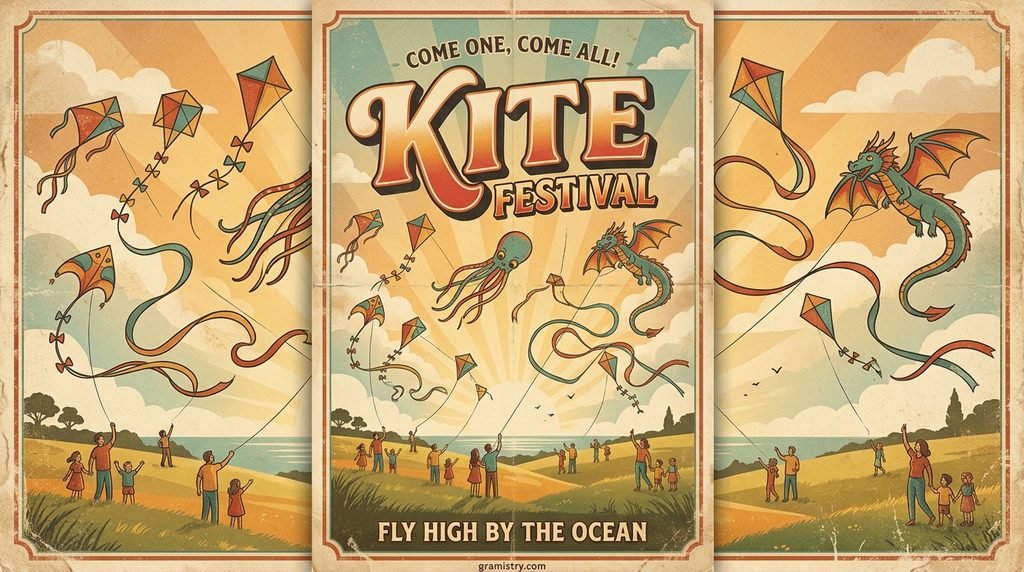
Kite is the standard English spelling. It is a common noun with several meanings, although the most familiar one is the object that people fly in the wind.
Kite Meaning and Definition
A kite is a lightweight frame covered with paper, cloth, plastic, or another material that is flown through the air using a long string. Cambridge Dictionary defines it as a frame covered with cloth or plastic and attached to a long string for flying in windy weather.
In simple terms:
Kite = a lightweight flying object controlled by a string.
For example:
- The children flew a kite in the park.
- My brother bought a colorful kite.
- The strong wind carried the kite high into the sky.
- We went to the beach to fly a kite.
The word is also commonly translated as پتنگ in English-Urdu dictionaries.
Pronunciation of Kite
Kite is pronounced:
/kaɪt/
It rhymes with words such as:
- light
- night
- right
- flight
- white
The pronunciation is essentially the same in British and American English, although dictionary phonetic systems may represent some regional details differently.
Grammar Role of Kite
Kite is most commonly used as a noun.
Examples:
- I bought a kite.
- The kite is flying.
- She repaired her kite.
However, kite can also function as a verb in specific contexts.
For example, to kite can mean to use a bad or fraudulent check to obtain money or credit. Merriam-Webster also records other verb meanings, including causing something to soar.
So, the meaning depends on context.
Other Meanings of Kite
The word kite has meanings beyond the familiar flying toy.
1. A Bird of Prey
A kite can also refer to certain birds of prey in the family Accipitridae. These birds generally have long wings and often a forked or notched tail.
Examples include:
- red kite
- black kite
- Mississippi kite
Example:
We saw a red kite circling above the countryside.
2. Financial or Banking Usage
In American informal business and banking language, kite can be associated with fraudulent checks.
For example:
The company was investigated for kiting checks.
Cambridge Dictionary describes kiting as illegally using checks involving insufficient funds to obtain money before the problem is discovered.
This is a specialized meaning, so beginners normally encounter kite first as the flying object.
History and Origin of Kite
The word kite has a long history in English. Merriam-Webster traces the noun to Middle English and Old English cȳta, originally associated with the bird of prey. Its earliest recorded use for the bird dates to before the 12th century.
The modern meaning referring to the flying object developed later. The word therefore has a much older linguistic history than its familiar children’s-toy meaning might suggest.
Common Mistakes With Kite
A common mistake is assuming that kyte is simply an alternative spelling of the modern word for a flying toy.
For standard English, write:
We flew a kite yesterday.
Not:
We flew a kyte yesterday.
If you are writing an essay, email, article, school assignment, or business document, kite is the spelling you normally want.
What Is “Kyte”?

Kyte is a real English word, but it is much less common than kite and has a different meaning.
Major dictionaries identify kyte primarily as a Scottish word meaning the belly, stomach, or paunch. Collins also records it in Scottish and Northern English usage and notes kite as a variant spelling in this particular dialectal sense.
Kyte Meaning and Definition
In simple terms:
Kyte = belly or stomach, especially in Scottish or dialectal English.
For example, a historical or dialectal sentence might use kyte to refer to someone’s stomach.
This is very different from the familiar meaning of kite as a flying object.
Pronunciation of Kyte
Kyte is generally pronounced like kite:
/kaɪt/
That means the two words are homophones or near-homophones in ordinary pronunciation, even though their meanings and spellings differ.
This similarity in sound is one reason learners may become confused.
Grammar Role of Kyte
Kyte is primarily a noun.
It refers to the belly, stomach, or paunch in Scottish and related dialectal usage.
Because this word is dialectal and uncommon in contemporary standard English, you are unlikely to encounter it in ordinary school textbooks, newspapers, business writing, or everyday international English.
Where Is Kyte Used?
Kyte is chiefly associated with Scotland, although Collins also identifies it with Northern English dialect usage.
That geographical distinction matters.
If you are writing standard English for an international audience, kyte should not normally replace kite.
For example:
I bought a kite.
This is standard English when you mean the flying object.
Writing:
I bought a kyte.
would normally be considered incorrect if you intended the flying toy.
Historical Note About Kyte
Merriam-Webster gives the first known use of kyte as around 1540 and suggests an origin connected with Low German. Collins dates the word to the 16th century and describes its origin as uncertain, possibly with Scandinavian connections.
This is a useful reminder that English spelling has developed through many regional dialects. A word can survive in a local variety even when it is no longer common in standard international English.
Kite vs Kyte: Key Differences
The easiest way to understand the difference is to focus on meaning and context.
- Kite is the standard spelling in modern English for the flying object.
- Kite can also refer to certain birds of prey.
- Kite has additional specialized meanings in banking and other contexts.
- Kyte is chiefly a Scottish dialect word meaning belly or stomach.
- Kyte is much rarer in contemporary English.
- Both words can be pronounced /kaɪt/.
- Kite is the appropriate spelling for normal everyday writing when you mean the flying toy.
- Kyte should generally be reserved for dialectal, historical, or quoted contexts where that word is specifically intended.
Quick Answer
Which is correct: kite or kyte?
Kite is correct when you mean the flying toy or the bird of prey. Kyte is a rare Scottish and Northern English dialect word meaning belly or stomach.
Kite vs Kyte Comparison Table
| Feature | Kite | Kyte |
|---|---|---|
| Standard modern English? | Yes | No, mainly dialectal |
| Main meaning | Flying object; also a bird of prey | Belly, stomach, or paunch |
| Pronunciation | /kaɪt/ | /kaɪt/ |
| Grammar | Mainly noun; also verb | Mainly noun |
| Main usage | International English | Scottish/Northern English dialect |
| Commonness | Very common | Rare |
| Suitable for academic writing? | Yes, when context requires it | Only when discussing the dialectal word |
| Suitable for everyday English? | Yes | Usually no |
| Meaning “flying toy”? | Yes | No |
| Meaning “belly”? | Not in ordinary standard English | Yes, dialectally |
Real-Life Conversation Examples
Conversation 1: Flying a Kite
Ali: What did you buy at the market?
Sam: I bought a new kite.
Ali: Nice! Are you going to fly it this afternoon?
Sam: Yes. The wind looks perfect.
🎯 Lesson: When you mean the object that flies on a string, use kite.
Conversation 2: A Spelling Question
Mia: Is it spelled kite or kyte?
Emma: If you mean the flying toy, it is kite.
Mia: So “kyte” is wrong?
Emma: Not exactly. It is a rare Scottish dialect word with a different meaning.
🎯 Lesson: Kyte is a real word, but it does not normally mean the flying toy.
Conversation 3: A Scottish Dialect Context
James: I came across the word kyte while reading an old Scottish text.
David: That makes sense. It can mean the belly or stomach in Scottish usage.
James: So it is not necessarily a spelling mistake?
David: Correct. Context matters.
🎯 Lesson: An unusual spelling is not automatically an error. Regional and historical English can contain words that are uncommon in standard English.
Conversation 4: Talking About Birds
Sara: Did you see that bird flying over the field?
Nora: Yes. I think it was a kite.
Sara: I didn’t know a kite could be a bird.
Nora: It can. The word has several meanings.
🎯 Lesson: Kite can refer to certain birds of prey as well as the familiar flying toy.
When to Use Kite vs Kyte
Knowing a simple rule can prevent almost every mistake.
Use “Kite” When You Mean:
- A flying toy attached to a string.
- A bird of prey called a kite.
- A kite-related activity or object.
- The verb kite in specialized contexts such as banking.
- Normal modern English usage.
Examples:
- Let’s fly a kite.
- The kite is stuck in a tree.
- We saw a red kite.
- The children made colorful kites.
Use “Kyte” When:
Use kyte only when you specifically need the Scottish or Northern English dialectal noun meaning belly, stomach, or paunch, or when discussing a historical/dialectal text.
This distinction is especially important in formal writing.
Easy Memory Trick
Think:
Kite flies. Kyte is dialectal.
Or remember:
Flying object = KITE
If you are talking about a normal toy that rises into the sky, kite is almost certainly the word you need.
US vs UK Usage
There is no normal US-versus-UK spelling difference in which Americans use kite and British speakers use kyte for the flying toy.
That is an important point.
Kite is the standard spelling in both American and British English for the flying object. Cambridge lists the word in both varieties with the familiar meaning.
Kyte is different because it is a dialect word rather than a standard British alternative spelling of kite.
So this is not like spelling pairs such as color/colour or license/licence.
Formal, Informal, and Academic Writing
Formal Writing
Use kite when referring to the flying object or bird.
Example:
The researchers observed a kite flying above the field.
Do not substitute kyte simply to make your writing sound unusual or old-fashioned.
Informal Writing
The same rule applies:
Let’s go fly a kite!
Kite is the natural choice.
Academic Writing
In academic writing, use kyte only if the subject requires it.
For example, a linguistics paper discussing Scottish dialects could legitimately say:
The Scottish dialect word kyte refers to the belly or stomach.
Here, the unusual spelling is relevant because the writer is discussing the word itself.
Common Mistakes People Make
Mistake 1: Writing “Kyte” for the Flying Toy
Incorrect in standard English:
We bought a kyte for the children.
Correct:
We bought a kite for the children.
Why?
The standard English spelling for the flying object is kite.
Mistake 2: Assuming Every Rare Word Is a Typo
Incorrect assumption:
“Kyte” cannot be a real English word.
Better understanding:
“Kyte” is a real but uncommon dialectal English word.
Why?
Merriam-Webster and Collins both record kyte as a Scottish-related word meaning belly or stomach.
Mistake 3: Treating Kyte as a US/UK Spelling Difference
Incorrect idea:
Americans write “kite,” but British people write “kyte.”
Correct understanding:
Kite is the standard spelling in both British and American English when referring to the flying object. Kyte belongs primarily to Scottish and Northern English dialect usage.
Mistake 4: Ignoring Context
Consider:
He flew a kite.
Here, kite clearly means the flying object.
But:
The old Scottish text uses the word kyte.
Here, kyte may refer to the belly or stomach.
The surrounding context tells you which meaning is intended.
Fun Facts and History
1. Kite Is Much Older Than the Flying Toy Meaning
The English word kite has a very old history. Merriam-Webster traces the noun to Old English and records its first known use before the 12th century in the sense connected with the bird.
2. Kyte Dates Back to the 16th Century
Merriam-Webster records the first known use of kyte around 1540. Its meaning was connected with the belly or stomach.
3. Kite Has Several Modern Meanings
The same word can describe a flying toy, a bird of prey, and specialized financial or verbal concepts. Context determines the meaning.
4. A Rare Word Can Still Be Correct
Kyte demonstrates how English contains regional vocabulary that may be unfamiliar to most speakers but remains legitimate in dictionaries and historical texts.
FAQs:
Is “kyte” the correct spelling of kite?
Usually, no. If you mean the flying object, kite is the standard spelling in modern English. Kyte is a separate, rare dialectal word mainly associated with Scotland and Northern England, where it means belly, stomach, or paunch.
What is the difference between kite and kyte?
Kite is the standard English word for a flying toy and can also refer to certain birds of prey. Kyte is chiefly a Scottish and Northern English dialect noun meaning belly or stomach. The two words may sound alike, but their meanings and standard usage are different.
Is kyte a real English word?
Yes. Kyte is a real English word recorded by major dictionaries. It is chiefly Scottish and refers to the belly, stomach, or paunch. It is uncommon in modern standard English, so many English speakers may never encounter it outside dialectal, historical, or dictionary contexts.
Is “kyte” another spelling of “kite”?
Not in the usual modern sense. Collins lists kite as a variant for the dialectal word kyte meaning belly, but this does not mean that kyte is a normal alternative spelling for the flying toy. For the flying object, use kite.
How do you pronounce kite and kyte?
Both are generally pronounced /kaɪt/. This is why they can be confusing when heard rather than seen in writing. The difference becomes clear from spelling and context: kite is the standard modern word, while kyte is chiefly dialectal.
Is kite used in American and British English?
Yes. Kite is used in both American and British English for the flying object. Cambridge provides definitions for both varieties. There is not a normal American-versus-British spelling distinction in which British English uses kyte for this meaning.
What does kyte mean in Scottish English?
In Scottish English, kyte means the belly or stomach. Collins also identifies it with Northern English dialect usage and gives kite as a variant in that particular dialectal sense.
Should I use “kyte” in formal English?
Generally, no, unless you are discussing Scottish or Northern English dialect, quoting a historical source, or specifically referring to the word kyte. For ordinary formal writing, use kite when you mean the flying object or the bird. This keeps your writing clear and consistent with standard English usage.
Which word should I use for a flying toy: kite or kyte?
Use kite. It is the standard spelling for the lightweight flying object attached to a string. For example: “The children are flying a kite.” Cambridge defines kite with this meaning and lists it as standard English vocabulary.
Can “kite” mean something besides a flying toy?
Yes. Kite can also refer to certain birds of prey. In specialized contexts, the verb kite can refer to activities involving fraudulent checks or to rising or soaring. The intended meaning depends on the sentence and context.
Quick Summary: Kite or Kyte?
If you only remember one thing, remember this:
- Kite = the standard modern English word.
- Kite = a flying toy attached to a string.
- Kite = also a type of bird of prey.
- Kite = used in several specialized expressions and contexts.
- Kyte = a rare Scottish/Northern English dialect word.
- Kyte = belly, stomach, or paunch.
- Both are generally pronounced /kaɪt/.
- For everyday, formal, academic, and professional English, choose kite when you mean the flying object.
For learners building vocabulary, resources such as Gramistry can be useful for understanding why similar-looking words do not always have the same meaning or grammatical function.
Conclusion:
The difference between kite and kyte is mainly a matter of meaning, spelling, and regional usage.
Kite is the standard modern English word for the familiar flying object and can also describe certain birds of prey.
Kyte is a much rarer Scottish and Northern English dialect word meaning belly or stomach.
Although both are generally pronounced the same way, they should not normally be treated as interchangeable.
When you mean the toy that flies in the wind, kite is the clear and correct choice.
Kyte belongs mainly to specialized dialectal or historical contexts.
Next time someone uses these two words, you’ll know exactly what they mean!

Alina Mark is the creative voice behind Gramistry.com, making word meanings, English expressions, and trending slang simple, clear, and interesting. Her mission is to make every word easier to understand, one meaning at a time.
1 thought on “Kite or Kyte: Which Is Correct? Meaning, Spelling, and Key Differences Explained”