

When you are choosing a color for clothing, paint, furniture, makeup, or design, tan and beige can seem almost identical.
Both are neutral colors associated with light brown, cream, sand, and natural tones.
That is why people often use the two words interchangeably.
However, they usually create different visual impressions, and the exact shade can vary depending on the context.
Although they look or sound similar, they serve completely different purposes.
In this guide, you will learn what tan and beige mean, how they differ, where each term comes from, and how to choose the right word in everyday conversation.
You will also see practical examples, a comparison table, common mistakes, and easy memory tricks.
If you enjoy clear explanations of confusing language, resources such as Gramistry can also help you understand subtle differences between everyday words.
What Is Tan?
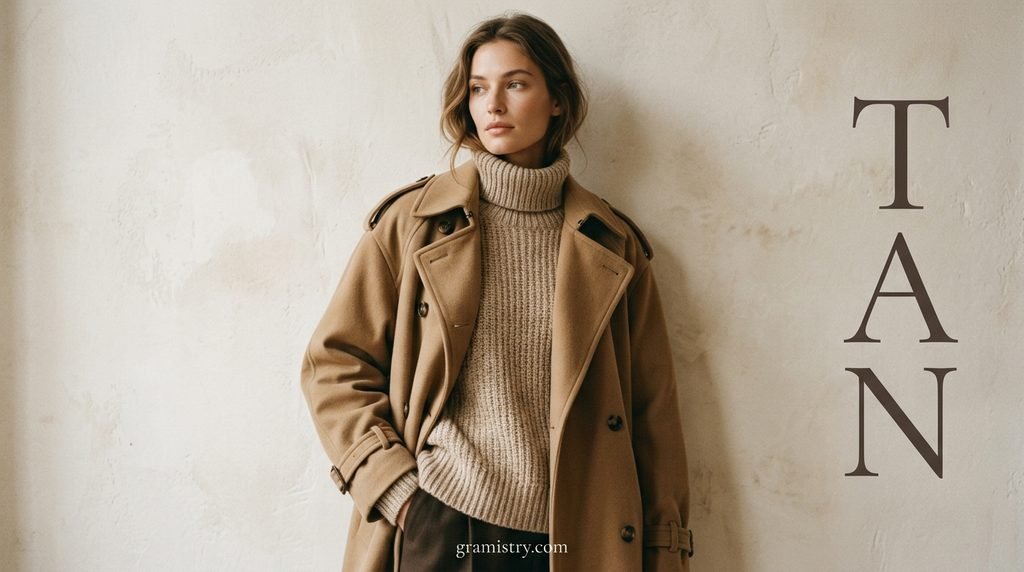
Tan is a light to medium brown color, usually with warm yellow, orange, or golden undertones. It is often associated with tanned skin, leather, sand, wood, and natural materials.
Tan: Quick Definition
Tan is generally a warm, light-brown color with noticeable golden, yellow, or orange undertones.
The exact shade of tan can vary. One tan may look relatively light and creamy, while another may be considerably darker and closer to brown.
Is Tan a Noun, Adjective, or Verb?
Tan can function as a noun, adjective, and verb.
- She got a beautiful tan during her vacation.
- He wore a tan jacket.
- We bought a tan sofa.
- She likes to tan at the beach.
So, unlike beige, tan has several grammatical uses.
How Is Tan Used?
The word tan is common in everyday English. It can describe:
- Clothing
- Shoes
- Leather
- Furniture
- Cars
- Walls
- Bags
- Skin
- Hair or fur
- Interior design
- Natural materials
For example:
- He bought a tan leather jacket.
- The house has tan walls.
- She wore tan boots with black jeans.
- The dog has a tan coat.
Tan as a Color
As a color, tan usually feels warm, earthy, and natural. It often has more visible brown or golden qualities than beige.
For example, imagine two neutral walls. One has a soft cream-brown appearance, while the other has a stronger golden-brown tone. The second wall would often be described as tan.
However, color names are not scientifically fixed in everyday language. Different brands, designers, manufacturers, and people may use tan for slightly different shades.
Origin and History of Tan
The color term tan is connected with the process of tanning animal hides to make leather. The resulting leather traditionally had a characteristic brownish color.
The word later became associated with skin that becomes darker after exposure to sunlight. From there, tan also developed its familiar use as a color name.
Common Tan Examples
Here are some natural examples:
- She bought a tan handbag.
- The living room has tan curtains.
- He wore tan trousers to work.
- The boots are made from tan leather.
- The dog has tan markings on its face.
What Is Beige?
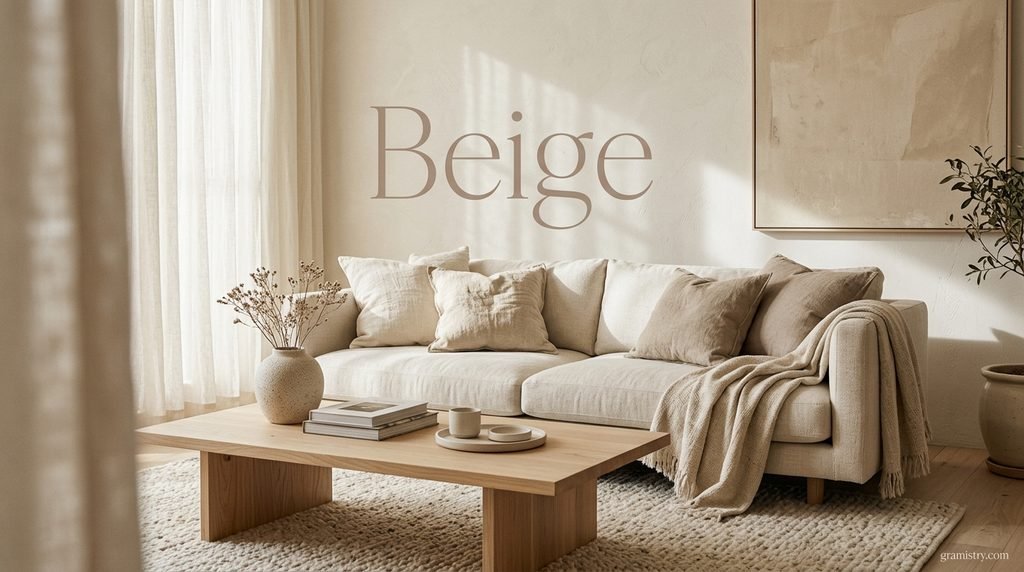
Beige is a pale, neutral color that generally falls somewhere between light brown, cream, gray, and yellow. It is usually softer and less strongly brown than tan.
Beige: Quick Definition
Beige is a pale neutral color that typically combines light brown, cream, gray, or yellowish tones.
Like tan, beige does not represent one perfectly fixed shade. It can range from warm cream-beige to cooler gray-beige.
Is Beige a Noun or Adjective?
Beige is most commonly used as a noun or adjective.
As a noun:
- Beige is a popular neutral color.
As an adjective:
- She bought a beige dress.
- The walls are beige.
- He chose a beige carpet.
Unlike tan, beige is not normally used as a verb in standard everyday English.
How Is Beige Used?
Beige is especially common when discussing:
- Interior design
- Paint
- Clothing
- Furniture
- Carpets
- Curtains
- Wallpapers
- Fashion
- Graphic design
- Home décor
Examples include:
- The bedroom has beige walls.
- She wore a beige sweater.
- They chose a beige carpet.
- The designer used beige as a background color.
Beige and Its French Connection
The word beige comes from French. It was originally associated with the natural color of undyed wool.
Over time, English adopted beige as a general color term. Today, it is widely used in fashion, design, architecture, and everyday conversation.
What Does Beige Look Like?
Beige is usually perceived as soft, subtle, understated, and neutral.
Depending on the particular shade, beige can contain:
- Cream
- Yellow
- Gray
- Light brown
- Warm undertones
- Cool undertones
This explains why one person’s idea of beige may look noticeably different from another person’s.
Key Differences Between Tan and Beige
Although the two colors overlap, there are some useful general differences.
- Tan is usually darker than beige.
- Tan tends to look more brown or golden.
- Beige is usually paler and more neutral.
- Tan often has warmer undertones.
- Beige can have either warm or cool undertones.
- Tan is strongly associated with leather, skin, and earthy materials.
- Beige is strongly associated with interiors, fashion, and neutral design.
- Tan can be a noun, adjective, and verb.
- Beige is primarily used as a noun and adjective.
- Neither word has one universally fixed color value.
Tan vs Beige: Comparison Table
| Feature | Tan | Beige |
|---|---|---|
| General appearance | Light to medium brown | Pale neutral |
| Typical undertone | Warm, golden, yellow, or orange | Cream, yellow, gray, or light brown |
| Usually darker? | Yes | Usually lighter |
| Overall impression | Warm and earthy | Soft and neutral |
| Common associations | Leather, skin, sand, wood | Paint, interiors, clothing, décor |
| Grammar | Noun, adjective, verb | Mainly noun and adjective |
| Example | Tan leather boots | Beige bedroom walls |
| Origin | Connected with tanning leather | Borrowed from French |
| Color category | Warm neutral/brownish | Pale neutral |
| Exact shade | Varies by context | Varies by context |
Real-Life Conversation Examples
Conversation 1: Choosing a Jacket
Mia: Which jacket should I buy, the tan one or the beige one?
Sam: I’d choose the tan one. It has a warmer brown tone.
Mia: I see. The beige one looks lighter.
Sam: Exactly. Beige is usually softer and paler.
🎯 Lesson: Tan generally has a stronger brown or golden appearance, while beige is usually lighter and more neutral.
Conversation 2: Choosing Wall Paint
Aisha: Should we paint the living room tan?
Daniel: I thought you wanted beige.
Aisha: Aren’t they basically the same?
Daniel: They’re similar, but beige may make the room look softer and lighter.
🎯 Lesson: Beige is often chosen for a softer neutral interior, while tan can give a room a warmer, earthier appearance.
Conversation 3: Shopping for Shoes
Customer: Do these shoes come in beige?
Salesperson: Yes, but the pair on the shelf is tan.
Customer: What’s the difference?
Salesperson: The tan pair is slightly darker and more brown. The beige pair is lighter.
🎯 Lesson: In fashion, the distinction often comes down to depth and undertone.
Conversation 4: Talking About Leather
Alex: I love your bag. Is that beige?
Nora: It’s actually tan leather.
Alex: Oh, I thought tan and beige were the same.
Nora: They’re close, but this one has a stronger golden-brown tone.
🎯 Lesson: Tan is especially common when describing leather because of its traditional warm brown appearance.
When to Use Tan vs Beige
The easiest way to choose between these words is to focus on the shade and context.
Use “Tan” When:
Use tan when the color appears noticeably brown, golden, or warm.
Examples:
- tan boots
- tan leather
- tan pants
- tan sofa
- tan belt
- tan dog
- tan skin
You can also use tan as a verb:
- I don’t want to tan in the sun.
- She tanned quickly during her vacation.
Use “Beige” When:
Use beige when the color is pale, muted, and neutral.
Examples:
- beige walls
- beige carpet
- beige curtains
- beige shirt
- beige furniture
- beige background
- beige sweater
An Easy Memory Trick
Think of tan as “brown + warmth” and beige as “light + neutral.”
If the color reminds you of warm leather, golden sand, or light brown, tan is often the better word.
If it looks more like pale cream, muted light brown, or a soft neutral, beige is often more appropriate.
What About US vs UK English?
There is no major American-versus-British spelling difference between tan and beige. Both words are used in American and British English.
The main difference is not regional grammar. Instead, people may use the words differently depending on their perception of the particular shade.
For example:
- American English: tan jacket
- British English: tan jacket
- American English: beige walls
- British English: beige walls
Both varieties use these terms naturally.
Formal and Academic Writing
In formal writing, use the color word that most accurately describes the object.
For example:
The study used a beige background to reduce visual contrast.
Or:
The samples were stored in tan-colored containers.
In academic writing, avoid treating tan and beige as exact scientific color measurements unless you provide a standardized color specification.
Common Mistakes People Make
Mistake 1: Assuming Tan and Beige Are Exact Synonyms
Incorrect assumption:
Tan and beige always mean exactly the same color.
Better understanding:
They overlap, but tan is generally warmer and darker, while beige is generally paler and more neutral.
Mistake 2: Calling Every Pale Brown Color Tan
Less natural:
The walls are tan.
If the walls are extremely pale and cream-like, beige may be a more natural description.
Better:
The walls are beige.
Mistake 3: Treating Beige as a Verb
Incorrect:
She beige the wall.
Correct:
She painted the wall beige.
Beige is not normally used as a verb in standard English.
Mistake 4: Forgetting That Tan Has More Than One Meaning
The sentence:
“She has a tan.”
does not describe the color of an object. Here, tan means a darker skin color caused by exposure to sunlight or a tanning process.
Compare:
She bought a tan coat.
In this sentence, tan is a color adjective.
Mistake 5: Assuming Every Brand Uses the Same Color Names
A clothing company might call a particular shade beige, while another company might label a very similar shade tan. Color naming is not always standardized in consumer products.
Therefore, when buying something online, it is better to look at the actual color, undertones, and product images rather than relying only on the label.
Tan or Beige for Clothing?
Both colors are versatile, but they create slightly different styles.
Tan often gives clothing a warmer, more rugged, or earthy appearance. It works especially well with:
- Black
- White
- Navy
- Denim
- Olive
- Dark brown
Beige tends to create a softer, understated, and minimalist appearance. It pairs well with:
- White
- Cream
- Brown
- Black
- Gray
- Navy
- Pastel shades
For example, tan boots can create a warm casual look, while a beige sweater may produce a softer neutral appearance.
Tan or Beige for Interior Design?
Both colors are popular in interior design because they are neutral and easy to combine with other colors.
Tan Interiors
Tan can make a room feel:
- Warm
- Earthy
- Comfortable
- Natural
- Traditional
Beige Interiors
Beige can make a room feel:
- Calm
- Light
- Neutral
- Soft
- Minimalist
However, the final effect depends on lighting, furniture, surrounding colors, and the exact shade.
A warm beige can look very close to tan under yellow lighting, while a cool beige can appear considerably different.
Fun Facts and History
1. Beige Comes From French
The English word beige was borrowed from French and became established as a color term in English.
2. Tan Is Connected to Leather
The color name tan has historical links to the process of tanning hides to produce leather.
3. Tan Also Describes Skin
Unlike beige, tan has a common non-color meaning related to skin darkening after sun exposure.
4. Color Names Are Flexible
Everyday color names do not always have precise boundaries. A particular shade may be described as tan, beige, camel, sand, khaki, cream, or another related color depending on context.
FAQs:
Is tan darker than beige?
Generally, yes. Tan is usually a warmer and somewhat darker shade of light brown, while beige is typically paler and more neutral. However, there is no universal rule that determines the exact brightness of every shade labeled tan or beige. Manufacturers and designers may use these names differently.
Are tan and beige the same color?
No, but they are closely related. Both are neutral colors with brownish or earthy qualities. Tan usually has stronger brown, golden, or warm undertones, while beige is generally lighter and softer. In everyday speech, people sometimes use the words interchangeably because the boundary between the shades can be subtle.
Which is lighter, tan or beige?
Beige is generally lighter than tan. A typical beige shade looks pale and muted, while tan usually has more visible brown or golden color. That said, individual shades vary, so a very light tan can overlap with a darker beige.
Is tan a shade of brown?
Tan is commonly considered a light shade of brown. It typically contains warm yellow, golden, or orange undertones. Depending on the exact shade, tan may look close to light brown, camel, sand, or warm beige.
Is beige a shade of brown?
Beige can be described as a pale neutral color related to light brown, but it is not simply a lighter version of every brown. Beige may contain cream, yellow, gray, or brown undertones, which gives it a softer and more neutral appearance.
Which color is better: tan or beige?
Neither color is universally better. The right choice depends on what you are trying to achieve. Tan is often better when you want warmth and a stronger earthy appearance. Beige is often better when you want a softer, lighter, and more understated neutral.
Can tan and beige be used interchangeably?
Sometimes, especially when describing approximate colors in casual conversation. However, they are not perfect synonyms. If the distinction matters, use tan for a warmer, more brownish shade and beige for a paler, more neutral shade.
Is beige warmer than tan?
Usually, tan is perceived as warmer because it often contains stronger golden, yellow, or brown undertones. However, beige can also be warm. Warm beige contains yellow, cream, or golden undertones, while cool beige may contain gray or muted undertones.
Is tan a color or a skin tone?
Tan can mean both. As a color, it describes a light-to-medium warm brown shade. As a noun, a tan can describe darker skin produced by exposure to sunlight or tanning. Context determines which meaning is intended.
What is the easiest way to remember tan vs beige?
Remember this simple rule: tan is usually warmer and browner, while beige is usually lighter and more neutral. Think of tan leather when you hear tan, and think of soft neutral walls or cream-colored fabric when you hear beige.
Conclusion:
In everyday English, the best choice depends on the shade, context, and intended meaning.
When the distinction matters, look at the color’s depth and undertones rather than relying only on a product label.
Next time someone uses these two words, you’ll know exactly what they mean!

Alina Mark is the creative voice behind Gramistry.com, making word meanings, English expressions, and trending slang simple, clear, and interesting. Her mission is to make every word easier to understand, one meaning at a time.