
Have you ever seen a small, fast-moving creature crawling across your bathroom floor or hiding under furniture? You may have wondered whether it was a silverfish or a centipede.
At first glance, these two creatures can look similar. Both have long bodies, move quickly, and often appear in dark, damp places. However, they are very different animals.
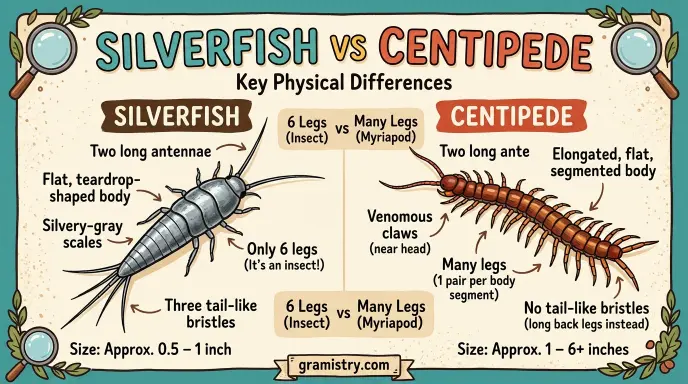
The easiest way to tell them apart is to look at their legs and body shape. A silverfish has six legs and a smooth, fish-like body. A centipede has many legs, with one pair on each body segment.
Although they may look similar, they have different body structures, diets, and habits. Knowing the difference can help you identify the creature in your home and decide what to do next.
What Is a Silverfish?
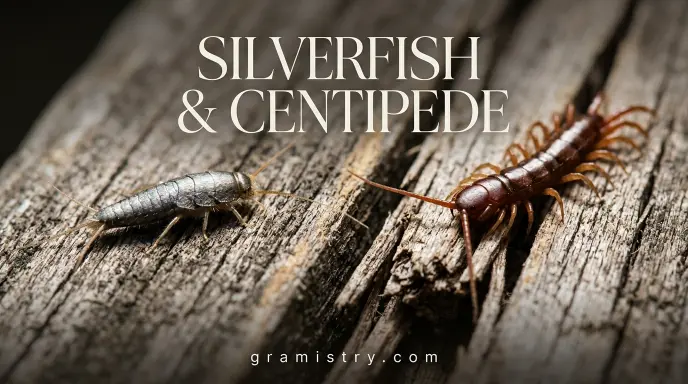
A silverfish is a small, wingless insect with a shiny, silver-colored body, six legs, and three long tail-like parts.
Its body looks like a tiny fish. It has a narrow shape that gets thinner toward the back. This is why people call it a silverfish.
Silverfish usually grow to about half an inch long. They move very quickly and can slip into small cracks when someone turns on a light.
Where Do You Find Silverfish?
Silverfish like dark, quiet places. They often live in areas where they can find food and moisture.
You may find them:
- In bathrooms and kitchens.
- Behind cupboards and furniture.
- Inside wardrobes and storage boxes.
- Between old books and papers.
- Near wallpaper and wall cracks.
- In basements and other damp areas.
They often come out at night. During the day, they hide in dark spaces.
What Do Silverfish Eat?
Silverfish feed on materials that contain starch, sugar, or other plant-based substances.
Their food may include:
- Paper and cardboard.
- Book bindings.
- Wallpaper glue.
- Flour and cereals.
- Dried food.
- Some fabrics containing starch.
This is why silverfish can become a problem in homes. They may damage books, papers, clothes, and stored food.
Are Silverfish Dangerous?
Silverfish do not bite or sting people. They are not known to be dangerous to humans.
However, they can damage personal belongings. If you find them in a cupboard or book collection, check nearby items for small holes, feeding marks, or shed scales.
The best way to reduce silverfish problems is to remove food sources, fix leaks, reduce excess moisture, and seal small gaps where possible. ipm.ucanr.edu+1
What Is a Centipede?
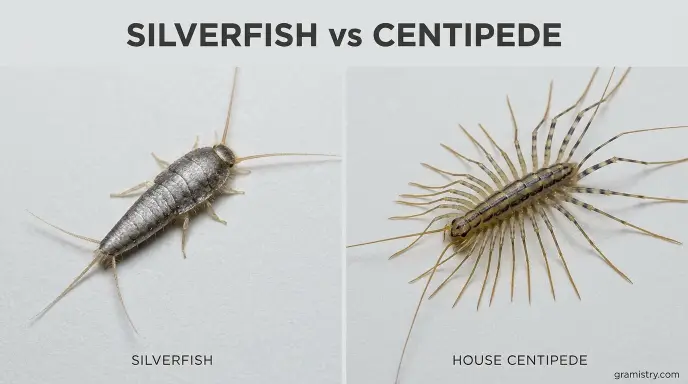
A centipede is a long, many-legged animal with a segmented body, one pair of legs on each body segment, and a pair of antennae.
Unlike a silverfish, a centipede is not an insect. It belongs to a group of animals called myriapods.
Centipedes come in different sizes and colors. Some are small and brown, while others are much larger. Their bodies are usually long and flat.
They also move very quickly. Some species can run across floors, walls, and other surfaces.
Where Do You Find Centipedes?
Centipedes prefer dark, sheltered places. Many species live outdoors, but some can enter houses.
Common places include:
- Under stones and rocks.
- Beneath fallen leaves.
- Inside damp soil.
- Under pieces of wood.
- In bathrooms and basements.
- Inside dark storage spaces.
They often hide during the day and become active at night.
What Do Centipedes Eat?
Centipedes are hunters. They do not normally feed on paper, clothes, or stored food like silverfish.
Instead, they hunt small animals and insects.
Their food may include:
- Cockroaches.
- Spiders.
- Crickets.
- Silverfish.
- Small worms.
- Other tiny insects and arthropods.
This makes many centipedes helpful in nature. They help control populations of small pests around homes and gardens. ipm.ucanr.edu+2
Are Centipedes Dangerous?
Centipedes have modified front legs that work like venom-injecting claws. They use them to catch and control their prey.
Some larger species can bite humans if someone handles or traps them. A bite may cause pain, redness, and swelling.
Most bites do not cause serious problems, but the reaction can vary depending on the species and person.
Never pick up an unknown centipede with your bare hands. If you find one indoors, keep your distance and use a safe removal method.
If a bite causes severe pain, a serious allergic reaction, or unusual symptoms, seek medical help. MSD Manual Professional Edition+1
Key Differences Between Silverfish and Centipede
Silverfish and centipedes may both move quickly and hide in dark places. However, their bodies, food, and behavior are quite different.
Here is a simple comparison:
| Feature | Silverfish | Centipede |
|---|---|---|
| Animal group | Insect | Myriapod |
| Body shape | Small and tapered | Long and segmented |
| Number of legs | Six | Many |
| Antennae | Two | Two |
| Tail | Three long bristles | Varies by species |
| Wings | No wings | No wings |
| Color | Usually silver or gray | Brown, yellow, red, or other colors |
| Movement | Fast and slippery | Often very fast |
| Main food | Starch, paper, and other organic materials | Small insects and animals |
| Hunting behavior | Does not hunt prey | Predator |
| Bite | Does not bite people | Some species can bite |
| Common habitat | Dark, often humid areas | Soil, leaf litter, and damp hiding places |
| Effect on homes | Can damage books and belongings | May help control other household pests |
The Easiest Way to Tell Them Apart
Look at the legs first.
- Six short legs: You are likely looking at a silverfish.
- Many legs along a long body: You are likely looking at a centipede.
- Three tail-like bristles: This is another strong sign of a silverfish.
- Long legs sticking out from the sides: This is a common sign of a centipede.
One important detail: centipedes have one pair of legs on each body segment. Their total number of legs depends on the species. They do not always have exactly 100 legs. The Australian Museum+2
Real-Life Conversation Examples
Here are five simple conversations that show how people might talk about silverfish and centipedes.
Example 1: Finding a Bug in the Bathroom
Ali: I saw a strange silver bug in the bathroom last night.
Sara: Did it have six legs and three little tails?
Ali: Yes, it did!
Sara: That sounds like a silverfish.
🎯 Lesson: A small, shiny insect with six legs is likely a silverfish.
Example 2: Seeing a Many-Legged Creature
John: There was a long bug running across my bedroom floor.
Mike: How many legs did it have?
John: Too many to count!
Mike: It might have been a centipede.
🎯 Lesson: A long body with many legs is a strong sign of a centipede.
Example 3: Finding Damage in a Book
Emma: I found tiny marks on some old books.
Lucy: Did you also see small silver insects nearby?
Emma: Yes, one was hiding between the pages.
Lucy: It could be a silverfish. They can feed on book bindings and paper materials.
🎯 Lesson: Silverfish can damage books and other paper items.
Example 4: Seeing a Centipede Near the Kitchen
David: I found a centipede near the kitchen cupboard. Should I be worried?
Tom: Don’t touch it. Some centipedes can bite.
David: So, should I remove it?
Tom: Yes, keep your distance and remove it safely.
🎯 Lesson: Avoid handling unknown centipedes because some can deliver painful bites.
Example 5: Understanding Their Diet
Mia: Do silverfish and centipedes eat the same food?
Anna: No. Silverfish feed on starchy materials, while centipedes hunt small insects.
Mia: So, a centipede might even eat a silverfish?
Anna: Yes, some centipedes do.
🎯 Lesson: Silverfish are material-feeding insects, while centipedes are predators.
When to Identify a Silverfish vs a Centipede
Knowing where each creature lives and what it looks like makes identification much easier.
Use these simple tips:
Identify a Silverfish When:
- You see a small, shiny, silver or gray insect.
- It has six short legs.
- Its body looks like a tiny fish.
- You notice three long bristles at its rear.
- You find it near books, cardboard, wallpaper, or stored food.
- You see small insects hiding in bathroom corners or cupboards.
Identify a Centipede When:
- You see a long body with many legs.
- Its legs stick out along the sides of its body.
- It runs very quickly.
- It has a pair of antennae on its head.
- You find it under stones, leaves, wood, or in damp spaces.
- You notice it chasing or feeding on other small creatures.
What Should You Do If You Find One?
Your next step depends on which creature you find.
If you find a silverfish:
- Check nearby books, clothes, and stored food.
- Remove paper waste and food crumbs.
- Fix leaking pipes and reduce excess moisture.
- Clean dark corners and storage spaces.
- Seal cracks where insects may hide.
- Keep children and pets away from it.
- Do not touch it with bare hands.
- Remove it carefully using a suitable tool or container if it is safe to do so.
- Clear leaves, stones, and unwanted materials near your home.
- Reduce damp hiding places and seal entry gaps.
Common Mistakes People Make
People often confuse silverfish and centipedes because both have long bodies and move quickly. Here are some common mistakes to avoid.
– Thinking silverfish are actual fish: Despite the name, silverfish are insects. They live on land and have six legs.
– Thinking centipedes always have 100 legs: The name suggests 100, but their actual leg count varies by species.
– Calling every many-legged creature a centipede: Millipedes and other small arthropods can also have many legs. Look at the body and leg arrangement before identifying one.
– Assuming silverfish and centipedes eat the same food: Silverfish feed on starchy materials and other organic matter. Centipedes hunt small animals.
– Thinking every centipede is harmless: Some species can deliver painful bites. Avoid handling them.
– Assuming silverfish can bite people: Silverfish do not bite or sting humans. Their main concern is damage to household belongings.
A simple rule can help you remember: six legs usually means silverfish; many pairs of legs along the body means centipede.
FAQs:
These two creatures have some interesting features that many people don’t know.
1. Silverfish Can Live for a Long Time Without Food
Silverfish can survive for several months without eating. This ability helps them survive in places where food is not always available. ipm.ucanr.edu
2. Centipedes Are Natural Pest Hunters
Many centipedes help control unwanted insects. They hunt creatures such as cockroaches, spiders, and silverfish. So, although they may look frightening, they can play a useful role in nature. Entomology+1
3. Neither Name Tells the Whole Story
A silverfish is not a fish, and a centipede does not always have 100 legs. Their names can be misleading, but their physical features make them easy to tell apart.
Conclusion:
Silverfish and centipedes may look similar at first, but they are very different creatures. A silverfish is a small insect with six legs and a shiny body.
A centipede has many legs and hunts other small animals. Silverfish can damage books and clothes, while centipedes help control insect pests.
The easiest way to identify them is to count their legs and look at their body shape. Remember these simple differences, and you’ll have no trouble telling them apart.
Next time someone sees a silverfish or centipede, they’ll know exactly what it means!

Alina Mark is the creative voice behind Gramistry.com, making word meanings, English expressions, and trending slang simple, clear, and interesting. Her mission is to make every word easier to understand, one meaning at a time.